The basics
Digital Infrastructure
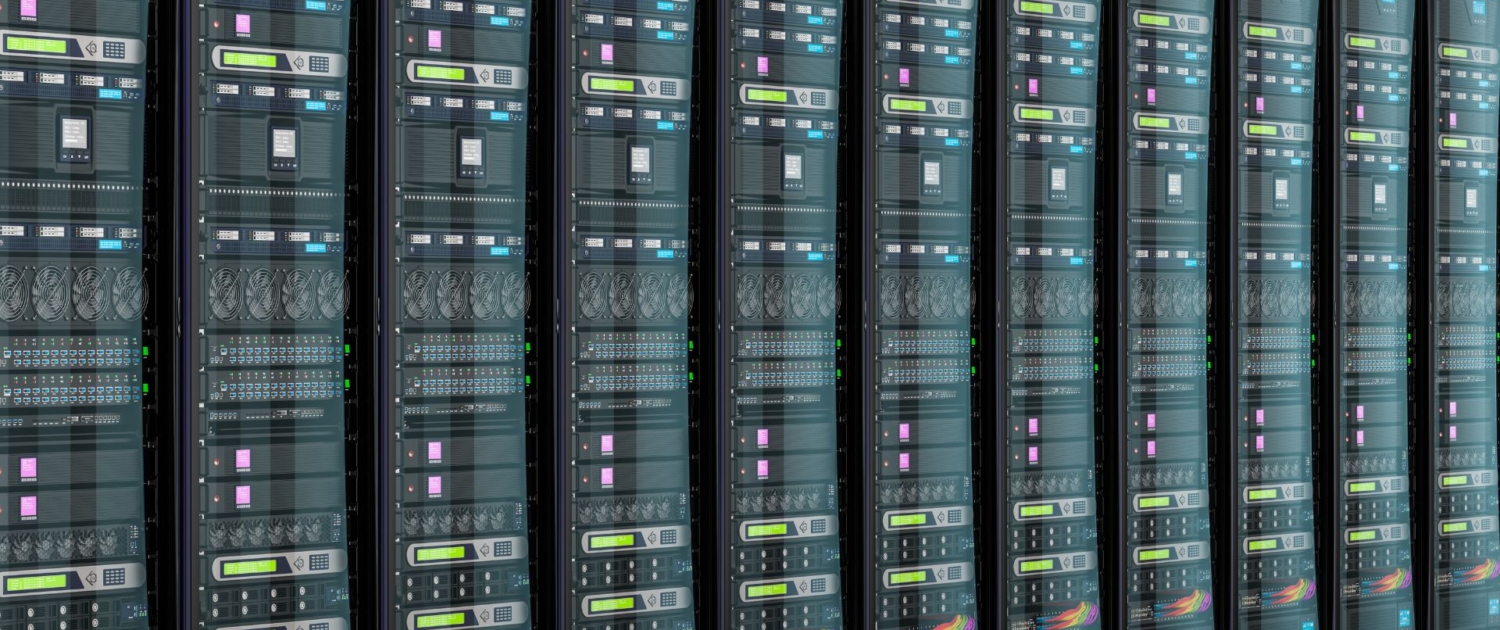
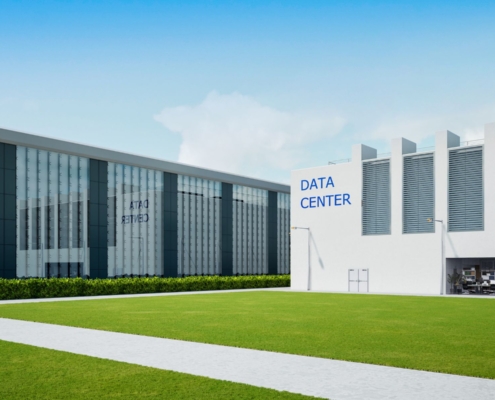
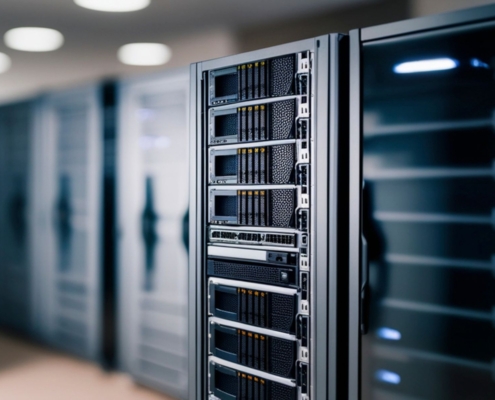
A data center is a purpose-built building or dedicated facility specifically designed to house IT equipment—servers, storage devices, and networking equipment—under secure, continuous, and controlled operating conditions. The systems running here store, process, and transmit the vast amounts of data that underpin our everyday digital lives.
Most people have never seen the inside of a data center, yet they use them dozens of times a day: when we send a message, pay at a store, watch a video, save a document to the cloud, or handle official business online. The data center is the physical home of these services.
What makes a data center special?
Unlike an office building, there is one factor that matters more than anything else in a data center: continuous, uninterrupted operation. Any failure of the systems housed here is immediately noticeable to users, which is why data centers are built around reliability and risk minimization in all their critical subsystems. The industry refers to this approach as “mission-critical.”
The Main Systems of a Data Center
A data center is much more than just the servers it houses. The true engineering feat lies in the supporting infrastructure operating behind the scenes:
Power supply. Continuous, dual power feeds, uninterruptible power supplies (UPS), and backup diesel generators ensure that no power outage causes downtime. The power supply is one of the most critical aspects of a data center.
Cooling and heat dissipation. The equipment generates significant heat, which must be continuously dissipated. In addition to traditional air cooling, liquid cooling is playing an increasingly important role, particularly in high-performance-density systems supporting artificial intelligence.
Network connectivity. Multiple, independent fiber-optic connections ensure that data is always accessible, even if one route fails.
Physical security. Access control systems, video surveillance, and strict access controls protect the equipment and data.
Fire protection. Early smoke detection and targeted fire suppression systems protect the facility.
Monitoring systems. Building management systems (BMS) and data center infrastructure management (DCIM) systems monitor temperature, power consumption, and equipment status in real time, helping to prevent failures.
Availability and Redundancy
Redundancy is key to data center reliability: duplicating critical systems so that the failure of a single component does not cause a service outage. The industry typically employs either an “N+1” (one spare in addition to the required capacity) or a “2N” (fully redundant system) configuration.
An internationally recognized standard for reliability is the Uptime Institute’s Tier classification, which distinguishes four levels (Tier I–IV) based on design, implementation, and operation. A higher tier indicates greater availability and the ability to continue operating during maintenance. In Europe, the EN 50600 family of standards is also becoming increasingly influential, providing a comprehensive set of requirements for the design and operation of data centers.
Types of Data Centers
Enterprise data center: serves the specific needs of a single organization.
Colocation data center: multiple customers rent space within it, sharing the existing infrastructure and its benefits.
Hyperscale data center: massive facilities operated by large cloud and technology providers.
Edge data center: a smaller facility located close to users, designed to accelerate latency-sensitive services.
Energy Efficiency and Sustainability
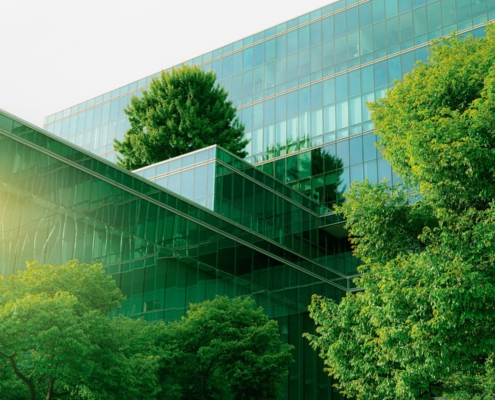
Since data centers consume significant amounts of energy, efficient operation is both an economic and an environmental priority. The most widely used metric is PUE (Power Usage Effectiveness), which indicates what proportion of the energy consumed is actually used by IT equipment. A value as close to 1.0 as possible is favorable.
State-of-the-art facilities are reducing their environmental footprint in an increasing number of ways: through open-air cooling, liquid cooling, renewable energy, and the utilization of waste heat—for example, to heat buildings or district heating networks. In addition, the European Union’s Energy Efficiency Directive (EED) requires larger data centers to provide regular, indicator-based reporting, which also enhances transparency.
Learn more!
Everything You Need to Know About Data Centers